
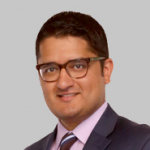
Asad Rizvi
Counsel, Labor and Employment, Panasonic Corporation of North America
Fox Rothschild, 2015 – 2019
- J.D., St. John’s University School of Law, 2010
- B.A., Rutgers University-New Brunswick, 2005
Is your role at Panasonic what you expected it to be?
My job at Panasonic is very different from my previous, more traditional legal roles. It’s my first time working for a global business and as in-house counsel, and my first experience working directly in the technology space. Panasonic has a fast-paced and innovative corporate culture, and its legal department is a reflection of that. There are many meetings where we try to hash out issues and find a consensus in real time. I’m really enjoying the collaboration and supporting the business as it moves forward.
What do you see as the major trends in labor and employment law?
In 2020 and 2021, I’ve touched anything you can think of that is COVID-19 related, from workplace issues to contact tracing and vaccinations. Another area we are dealing with now is cannabis legalization, looking at what you can and cannot regulate as an employer. It’s interesting to see trends shift with the political changes in Washington. Under the Biden administration, we expect to see a focus on workers’ concerns.
You have taken on a lot of pro bono immigration work. What attracts you to these issues?
My family immigrated to New York from Pakistan in the late 1980s, when I was three years old, so I have first-hand knowledge about the immigrant experience. I am also very interested in politics and international affairs. But most importantly, I enjoy helping people who have been affected by dangerous political or social situations. It’s very meaningful to be able to help them navigate the U.S. immigration system so that they can find refuge here. You can directly influence someone’s life.
At Fox, I worked with Kids in Need of Defense (KIND), an organization that protects unaccompanied and separated children. We represented a child from Honduras who crossed the U.S. border through Texas. Ultimately, we were able to reunite him with his biological mother in New Jersey. I also worked on some successful asylum cases in a legal clinic with Catholic Charities while in law school, including helping a man bring his family over from Belarus after he fled political repression. In addition to my earlier pro bono immigration work, since joining Panasonic, I have been actively participating in the Veterans Legal Wellness Clinic, providing direct representation to veterans on a myriad of legal issues from housing to bankruptcy in partnership with Volunteer Lawyers for Justice.
Where would we find you on a Saturday morning?
My wife and I have a 4-year-old daughter, and our weekends revolve around family activities, such as going to a music festival, museum or a farmer’s market and exploring new restaurants. Learning languages is also a passion of mine. Although I’m most fluent in English, my first spoken language was Urdu, and I’ve tried to enhance my knowledge. Recently, I took an online literature course on short stories by Urdu authors. In college, I studied Arabic as well as Persian – my wife’s native tongue – and even brushed up on my Spanish. While we speak mainly English at home, we try to expose our young daughter to as much Urdu and Persian as we can. We want to keep those cultural connections strong.