

Chapter 15 Bankruptcy: Can it Help Cannabis Businesses that Go Up in Smoke?
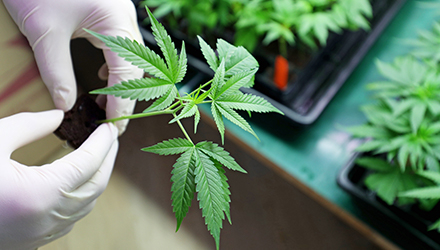
To date, U.S. bankruptcy courts have been reluctant to administer bankruptcy cases involving the restructuring or liquidation of assets owned by cannabis-related entities.
Cannabis remains a Schedule 1 controlled substance under the Controlled Substances Act, or CSA, and the U.S. Bankruptcy Code generally requires debtors to comply with applicable nonbankruptcy law.
Virtually all bankruptcy cases that involve a restructuring or sale of cannabis-related entities have been dismissed as violating the CSA. The U.S. Trustee's Office, which is the component of the U.S. Department of Justice responsible for overseeing the administration of bankruptcy cases, consistently seeks to dismiss such cases on the grounds the entities violate applicable nonbankruptcy law.
These cases, however, are generally filed under Chapters 7, 11 or 13 of the Bankruptcy Code, all of which permit bankruptcy cases to be dismissed for violations of nonbankruptcy law. No such provision applies to Chapter 15 bankruptcy cases, which provide for the recognition of foreign bankruptcy proceedings.
Recognition of a foreign bankruptcy proceeding must be granted if the court finds that the foreign proceeding is a "foreign main" or a "foreign nonmain" proceeding unless the bankruptcy court finds that recognition would be manifestly contrary to the public policy of the U.S.
Very few courts have denied recognition under this "public policy" exception, and none have considered it in the context of cannabis.
This article considers whether Chapter 15 bankruptcy may be used as a tool to liquidate U.S. cannabis-related assets of debtors in foreign bankruptcy proceedings, and the statutory provisions applicable in Chapter 15 bankruptcy cases that have a bearing on the successful liquidation of assets under the Bankruptcy Code.
Scope of the Cannabis Industry
The U.S. cannabis industry has seen a transformation in the past decade — shifting from a largely illicit market to a burgeoning legal industry. Today, marijuana is legal for adult recreational use in 24 states,[1] the District of Columbia and several U.S. territories.[2] It is also legal for medical use in 38 states.[3]
This boom of state-level legalization has led to significant financial growth in the cannabis industry. In 2023, sales of legal medical and recreational marijuana reached $28.8 billion, a 10.3% increase from the year prior.[4] Sales are projected to top $45 billion by 2027.[5] The industry includes at least 81,000 businesses with approximately 268,000 employees.[6]
Like many U.S. states, several countries have either legalized or decriminalized cannabis use. The recreational use of cannabis has been legalized in Canada, Georgia, Germany, Luxembourg, Malta, Mexico, South Africa, Thailand, Uruguay, and the Australian Capital Territory.[7]
Scores of additional countries have decriminalized cannabis use in varying degrees. Commercial sale of recreational cannabis is legalized at the federal level only in Canada, Thailand and Uruguay.[8]
History of Bankruptcy Courts Barring Cannabis Companies From Filing for Chapter 7, 11 or 13
Despite the widespread state-level legalization of marijuana in the U.S., marijuana remains illegal under the CSA.[9] As a result, cannabis companies face substantial hurdles in U.S. bankruptcy courts.[10]
Bankruptcy courts have denied cannabis companies protection, invoking Title 11 of the U.S. Code, Sections 707(a)(1), 1112(b)(1) or 1307(c), which allow the court to dismiss a case "for cause."[11]
Cause to dismiss includes, inter alia, "gross mismanagement of the estate,"[12] and "violations of nonbankruptcy law [such as the CSA] may constitute 'gross mismanagement' of the estate ... because violations of nonbankruptcy law might expose the estate to financial losses and criminal sanctions."[13]
Conduct that demonstrates a lack of good faith may also amount to cause to dismiss a bankruptcy case.[14] The CSA prohibits, among other things, knowingly renting, managing or using property "for the purpose of manufacturing, distributing, or using any controlled substance"; selling or offering for sale any drug paraphernalia; and deriving profits or proceeds from an offense of the CSA.[15]
Thus, in many instances, a trustee could not do the work of administering the estate of a cannabis business without violating the CSA in some way.[16] Where a trustee would be required to violate federal law to administer an estate, the plan is not confirmable.[17] As a result, reorganization plans regarding cannabis businesses are usually not confirmable.
The DOJ reiterated this view in a 2017 memo in which it advised U.S. trustees that the estate in cannabis-related bankruptcies cannot be lawfully administered when doing so involves ongoing criminal conduct and administration of illegal property.[18] In its memo, the DOJ drew a distinction between prepetition violations of nonbankruptcy law, such as those violations seen in the cases of Enron and Bernie Madoff, and ongoing criminal enterprises.[19]
In the latter, a criminal enterprise may seek the "assistance of the bankruptcy court in order to reorganize its balance sheet and thereby facilitate its violations of the law going forward."[20] In the DOJ's view, the bankruptcy system should not be an instrument in such efforts.[21]
However, some bankruptcy courts appear to be moving toward a less restrictive approach to cannabis cases and considering these on a case-by-case basis.[22]
As the Bankruptcy Appellate Panel for the Ninth Circuit noted in 2020 in In re: Burton, "the mere presence of marijuana near a bankruptcy case does not automatically prohibit a debtor from bankruptcy relief."[23] But potential debtors with ongoing cannabis ties should wait to celebrate this shift.
Although courts are taking a more liberal approach to prepetition CSA violations, debtors committing ongoing CSA violations, and profiting from those violations, are still unlikely to gain bankruptcy protection.[24]
Chapter 15 Discussion and Overview
Although federal law in the U.S. continues to criminalize cannabis businesses, marijuana is legal in nine countries.[25] Many cannabis companies in these countries are eager to explore the potential of the U.S. cannabis market.
In 2022, Canada-based cannabis company Canopy Growth Corp. created a U.S.-domiciled holding company to facilitate entry into the U.S. cannabis industry.[26] While some companies may find success entering the U.S. cannabis market, others may struggle and ultimately seek the protection of U.S. bankruptcy courts.
Chapter 15 of the U.S. Bankruptcy Code addresses cross-border insolvency.[27] Its purpose is to facilitate international cooperation between U.S. courts and foreign courts where debtors, assets, creditors and other interested parties span more than one country.[28]
Under Chapter 15, a foreign representative can apply to a U.S. bankruptcy court for recognition of a foreign bankruptcy proceeding.[29]
Upon recognition of a foreign bankruptcy proceeding as a "foreign main proceeding," Chapter 15 imposes a stay on actions against the debtor and the debtor's assets within the U.S.[30] For example, a foreign debtor with assets or business activities in the U.S. may seek recognition of its foreign bankruptcy proceeding in the U.S. to protect those assets from creditor action.
Chapter 15 differs from Chapter 11 in that it neither creates a bankruptcy estate nor requires a debtor or trustee to propose a plan of reorganization or administration of an estate. Debtors instead propose these plans in foreign bankruptcy proceedings — where the manufacture, sale or use of cannabis may be legal or decriminalized.
The role of the U.S. bankruptcy courts in a Chapter 15 case is purely focused on principles of comity and protecting the U.S. assets of the debtor.[31] Thus, concerns over a trustee's role in administering property that might be illegal in the U.S. is arguably not applicable to Chapter 15.
Importantly, there is no mechanism applicable in Chapter 15 for dismissing a bankruptcy case if the bankruptcy case does not comply with applicable nonbankruptcy law as is the case in Chapters 7, 11 and 13. However, the statute provides that U.S. bankruptcy courts may still "[refuse] to take an action governed by [Chapter 15] if the action would be manifestly contrary to the public policy of the United States."[32]
Courts have interpreted this public policy exception narrowly, finding that Congress' use of the word "manifestly" requires the statute be interpreted restrictively.[33] Bankruptcy courts have concluded that it should apply in actions that violate "the most fundamental policies of the United States."[34]
In order to determine whether an action is manifestly contrary to U.S. public policy, courts have generally considered the following two factors: (1) whether the foreign proceeding is procedurally unfair, and (2) whether recognition of the foreign proceeding would severely impinge a constitutional or statutory right, or frustrate a bankruptcy court's ability to carry out the fundamental purpose of such constitutional or statutory right.[35]
Alternatives to Bankruptcy
Questions surrounding the various approaches taken by U.S. bankruptcy courts in bankruptcy cases involving cannabis-related businesses may cause some cannabis companies to seek state-level protections in cross-border insolvency matters. That may include receiverships, assignments for the benefit of creditors and creditor compositions.
Recently, MedMen, a cannabis company with subsidiaries operating in the U.S., commenced bankruptcy proceedings in Canada.[36] At the same time, the company's California subsidiary was placed into receivership.[37] Receiverships allow for court-supervised management of assets and are governed by state law.
This means that in states where cannabis is legal, receivers can manage cannabis-related assets.[38] Although MedMen's reasons for choosing a receivership over Chapter 15 recognition are unknown, it is likely that it chose a state-level solution to avoid the uncertainty associated with federal intervention.
However, receiverships and assignments for the benefit of creditors do not offer the full protection of assets available under the Bankruptcy Code. For example, although a receivership protects a cannabis company's assets in the receivership state, a receiver's power in other jurisdictions is limited. This means that a cannabis company's assets owned or controlled in another state may still be vulnerable.
One solution may be for the receiver to seek approval from another state's court to seize or sell assets located in the other state.[39] Creditors may also seek ancillary receivership proceedings in states where the cannabis company owns or controls assets.[40]
And unlike bankruptcy, debtors that wish to liquidate under state law will have access to fewer tools. For example, state proceedings won't offer nationwide service of process and the imposition of the automatic stay, among other things.
Conclusion
To date, no foreign cannabis company has sought recognition under Chapter 15. If a foreign cannabis company sought Chapter 15 recognition, the U.S. Trustee's Office would most likely oppose recognition.
Because marijuana remains illegal under federal law, the U.S. Trustee's Office would likely argue that it would be manifestly contrary to U.S. public policy to give the foreign cannabis company the protection of U.S. bankruptcy courts. However, bankruptcy courts may be more willing to grant recognition where a potential violation of U.S. public policy arguably exists.
Additionally, as U.S. bankruptcy courts shift toward a more case-specific approach to liquidation of assets related to cannabis businesses in Chapter 7, Chapter 11 and Chapter 13, their approach is likely to be considered in Chapter 15 cases.
That is, if recognition under Chapter 15 contemplates the continued manufacture, distribution and sale of cannabis, or investment in cannabis-related enterprises, bankruptcy courts may be reluctant to permit such businesses to avail themselves of the tools available to otherwise legal business under the Bankruptcy Code.
Summer associate Kelsey Henderson contributed to this article.
The opinions expressed are those of the author(s) and do not necessarily reflect the views of their employer, its clients, or Portfolio Media Inc., or any of its or their respective affiliates. This article is for general information purposes and is not intended to be and should not be taken as legal advice.
[1] These states include Alaska, Arizona, California, Colorado, Connecticut, Delaware, Illinois, Maine, Maryland, Massachusetts, Michigan, Minnesota, Missouri, Montana, Nevada, New Jersey, New Mexico, New York, Ohio, Oregon, Rhode Island, Vermont, Virginia and Washington. Kerry Breen, Maps show states where weed is legal for recreational, medical use in 2024 (CBS News May 17, 2024), https://www.cbsnews.com/news/legal-weed-map-states/.
[2] Shannon Cudd, State Governments Must be Loving 4/20 Almost as Much as Tax Day, Fast Company (Apr. 20, 2024), https://www.fastcompany.com/91109592/tax-revenue-legal-weed-by-state-map-4-20-2024.
[3] National Conference of State Legislatures, State Medical Cannabis Laws, https://www.ncsl.org/health/state-medical-cannabis-laws (last visited June 14, 2024).
[4] See Higham, supra note 2.
[5] Iris Dorbian, U.S. Legal Cannabis Market Sales to Sour to $45 Billion in 2027, Says Top Researcher, Forbes (June 8, 2023), https://www.forbes.com/sites/irisdorbian/2023/06/08/us-legal-cannabis-market-sales-to-soar-to-45-billion-in-2027-says-top-researcher/.
[6] Medical & Recreational Marijuana Growing in the US – Market Size, Industry Analysis, Trends and Forecasts (2024-2029), IBISWorld (June 2024).
[7] Haines, Gavin, Everything you need to know about marijuana smoking in the Netherlands, The Telegraph (Feb. 21, 2017), https://www.telegraph.co.uk/travel/destinations/europe/netherlands/amsterdam/articles/everything-you-need-to-know-about-smoking-marijuana-in-the-netherlands/.
[8] Id. However, Thailand recently enacted legislation to ban recreational use of marijuana, which is expected to go into effect by the end of 2024. Thepgumpanat, Panarat and Wongcha-um, Panu, Thailand to ban recreational cannabis use by year-end, health minister says, Reuters (Feb. 29, 2024), https://www.reuters.com/world/asia-pacific/thailand-ban-recreational-cannabis-use-by-year-end-says-health-minister-2024-02-29/.
[9] Controlled Substances Act, 21 U.S.C. § 801 et seq.
[10] See e.g., In re Arenas , 535 B.R. 845 (B.A.P. 10th Cir. 2015).
[11] 11 U.S.C. § 1112(b)(1); see also id.
[12] 11 U.S.C. § 1112(b)(4)(B).
[13] In re Hacienda Company LLC , 654 B.R. 155, 161 (Bankr. C.D. Cal. 2023).
[14] In re Arenas, 535 B.R. at 847.
[15] Controlled Substances Act, supra note 7.
[16] See id.
[17] See In re Arenas, 535 B.R. at 847.
[18] Clifford J. White III and John Sheahan, Why Marijuana Assets May Not Be Administered in Bankruptcy, Department of Justice. (2017), https://www.justice.gov/archives/ust/file/abi_201712.pdf/dl
[19] Id.
[20] Id.
[21] Id.
[22] See e.g., In re Hacienda Company LLC, 654 B.R. 155.
[23] In re Burton , 610 B.R. 633, 637-38 (9th Cir. B.A.P. 2020).
[24] Compare In re Hacienda Company, LLC, 654 B.R. 155, with In re Blumsack , 657 B.R. 505 (1st Cir. B.A.P. 2024).
[25] Marijuana is legal nationwide in Canada, Germany, Mexico, South Africa, Thailand, Luxembourg, Malta, Georgia and Uruguay.
[26] Press Release, Canopy Growth to Fast Track Entry into the U.S. Cannabis Market, Canopy Growth (Oct. 25, 2022), https://www.canopygrowth.com/investors/news-releases/canopy-growth-us-cannabis-market/.
[27] 11 U.S.C. § 1501.
[28] See 11 U.S.C. § 1501.
[29] 11 U.S.C. § 1504. Recognition can be either as a "foreign main proceeding," involving the debtor's main interests, or a "foreign non-main proceeding," involving an establishment of the debtor. U.S. bankruptcy courts treat these two types of proceedings differently in many ways. This article will focus on the treatment of foreign main proceedings, but it should be noted that what is true for main proceedings is not necessarily true for non-main proceedings.
[30] See 11 U.S.C. §1520.
[31] See 11 U.S.C. §1528.
[32] 11 U.S.C. § 1506.
[33] In re Fairfield Sentry Ltd. , No. 10 CIV. 7311 GBD, 2011 WL 4357421, at *8 (S.D.N.Y. Sept. 16, 2011), aff'd, 714 F.3d 127 (2d Cir. 2013) (noting that "courts have agreed that Congress's use of the word 'manifestly' requires the statute to be interpreted restrictively").
[34] In re Ephedra Products Liability Litigation , 349 B.R. 333, 336 (S.D.N.Y. 2006).
[35] In re Qimonda AG Bankr Litig , 433 B.R. 547, 568-69 (E.D. Va. 2010).
[36] Press Release, MedMen Announces Entering Bankruptcy Proceedings and Resignation of CFO and Directors, Businesswire (Apr. 26, 2024), https://www.businesswire.com/news/home/20240426846714/en/MedMen-Announces-Entering-Bankruptcy-Proceedings-and-Resignation-of-CFO-and-Directors.
[37] Id.
[38] See Brent Salmons and Yuefan Wang, Alternatives to Bankruptcy for Cannabis Companies (Part 2), Cannabis Law Now (Sept. 1, 2023), https://www.cannabislawnow.com/2023/09/alternatives-to-bankruptcy-for-cannabis-companies-part-2/.
[39] See e.g., Nev. Rev. Stat. § 32.355(2).
[40] See Press Release, supra note 58.
Reprinted with permission from Law360 © 2024 Portfolio Media. Further duplication without permission is prohibited. All rights reserved.