


Breaking Down Maryland's Adult-Use Cannabis Bill
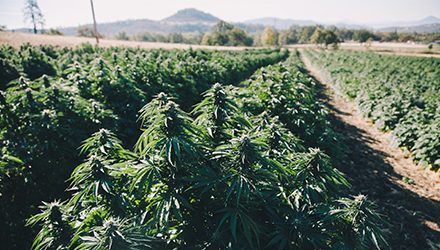
In November 2022, Maryland voters approved adult-use cannabis, and on Feb. 3, 2023, Maryland state lawmakers introduced S.B. 516, cross-filed as H.B. 556, which provides a regulatory framework for the cultivation, production and sale of adult-use marijuana.
A hearing on H.B. 556 took place on Feb. 17,[1] while another on S.B. 516 occurred on March 9.[2]
At present, 21 states along with Washington, D.C., have now approved cannabis for adult use.[3] Because marijuana remains illegal at the federal level, regulations have largely been left to the states and sometimes even counties or municipalities.
Each state has its own take on how cannabis should be regulated and comes with its own idiosyncrasies.
This article is not only meant to highlight certain key aspects of S.B. 516, but also to discuss how the bill, as it stands, will affect Maryland's marijuana market both locally and nationally.
Blackout Period
It's unlikely for there to be a flurry of cannabis license acquisitions, dispositions or transfers in Maryland, at least possibly not for the next five years because, under S.B. 516, both newly issued cannabis licensees and licenses that are converted from medical to dual cannabis licenses are prohibited from transferring any ownership or control of the license for at least five years following licensure, except for the death of an owner.
A five-year prohibition on license transfer is on the longer end of the spectrum: It's common to place a one- to two-year restriction on license transfer.
In Nevada, for instance, the holder of an adult-use cannabis establishment license for a marijuana consumption lounge is prohibited from transferring the license for at least two years after the independent cannabis consumption lounge for which the license was issued became operational.[4] In Illinois, if a social equity licensee seeks to transfer, sell or grant a cannabis business establishment license within five years after it was issued to a person or entity that does not qualify as a social equity applicant, the transferee will need to pay a fee.[5]
The five-year blackout period may be problematic for businesses seeking to sell or transfer their licenses due to cash flow or profitability issues, which could be in addition to the three-year blackout period that existed for operational medical marijuana businesses under the medical program.
In other words, this might unfairly impose a potential eight-year blackout period for licenses issued under the legacy medical marijuana program.
Not surprisingly, the transfer restrictions included under H.B. 556 were a significant topic of discussion at the Feb. 17 hearing.
One possible rationale for this five-year blackout period, however, is that it gives the Cannabis Regulation and Enforcement Division, established within the Office of the Executive Director of the newly formed Alcohol Tobacco and Cannabis Commission, one less item to worry about when it is focusing on getting Maryland's adult-use cannabis program up and running.
In the past, we have seen instances where the license transfer blackout period is limited to one year after the issuance.
But the agency stumbled at the hearing to explain and execute the mechanisms laid out in facilitating what happens when a licensee wants to transfer its license. So, while a transfer is allowed in theory, practically speaking, no one knows what or how the transfer would look like.
It can often be nerve-wracking for the licensee and potential buyer if your license happens to be the license in which the agency is using as a case of first impression to figure out how the transfer mechanism spelled out in the regulations actually works in practice.
Even when there is a transfer mechanism in place, they are sometimes fraught with ambiguity, like the bill as currently framed, and are burdensome for licensees to figure out.
Vertical Integration
Despite the five-year blackout period and limitation on the number of licenses that a person may have ownership interest or control in, one thing that might interest major players in the industry entering Maryland's cannabis market is the allowance for vertical integration.
In brief, vertical integration allows an entity to grow, process, distribute and sell cannabis to its consumers. Some states like Florida mandate vertical integration, whereas other states like Washington strictly prohibit this.[6]
Proponents of vertical integration argue that it allows companies to respond to quality concerns from customers more efficiently because businesses are in control of all aspects from seed to sale.[7]
Furthermore, this model allows businesses to take greater advantage of limited tax benefits through the costs of goods sold.[8]
Opponents argue that not everyone can afford to participate in this model and that it discourages small businesses from setting up shop in the first place, favoring large companies with big financial backing.
Maryland neither requires nor prohibits it, but allows it.
Under the proposed bill, the only limitation is that a person who owns or controls an incubator space licensee or an on-site consumption licensee may not own or control any other cannabis licensee. It is otherwise permissible for people to have ownership interests in all three primary types of licenses: grower, processor and/or dispensary license.
Lack of Protection for Off-the-Job Marijuana Use
In September 2022, California Gov. Gavin Newsom signed A.B. 2188, amending the California Fair Employment and Housing Act to make it "unlawful for an employer to discriminate against a person in hiring, termination, or any term or condition of employment, or otherwise penalizing a person" for their use of cannabis outside of work.[9] This law will take effect on Jan. 1, 2024.
Washington, D.C., did something similar through the Marijuana Employment Protections Amendment Act of 2022, which will take effect starting July 13.[10]
Seeing that Maryland is one of the most recent states to legalize adult-use cannabis, one would think that S.B. 516 would have included a provision that prohibits private employers from firing or discriminating against employees who use marijuana outside of work, but no such luck.
S.B. 516 does not "prohibit any employer from denying employment or a contract to an individual or disciplining an employee or a contractor for testing positive for the presence of cannabinoids or cannabinoid metabolites ... if the test was conducted in accordance with the employer's established drug testing policy."
Maryland might later change its mind, as seen in California and Washington, D.C., but for now, employees beware.
On-Site Consumption Lounges
Although 21 states have now legalized the production and sale of adult-use marijuana, only a handful allow consumption lounges — Maryland is among them. The division will issue up to 50 on-site consumption licenses.
But note that although the state allows for them, the county or municipality where the business is located still has the authority to prohibit or restrict smoking or vaping at on-site consumption establishments or ban on-site consumption establishments entirely.
The decision by state regulators to recognize local government authority follows an increasing trend among states to work together with county and municipal leadership in implementing and managing new cannabis laws.
However, this places additional regulatory burdens on licensees of on-site consumption lounges licensees seeking to comply with both state and local regulations.
Social Equity Program
The division will prioritize converting existing medical cannabis licenses into medical and adult-use marijuana businesses on or before July 1, before it begins to issue the first round of licenses to social equity applicants.
Some have criticized the division's prioritization of medical license holders because if the existing program lacked diversity, this only carries the problem over.
But others noted that all existing medical license holders who want to convert must pay a fee, and that fee will be used toward providing funds to community-based organizations that have been the most impacted by the disproportionate enforcement of the cannabis prohibition.
The conversion fee ranges between $25,000 to $2.5 million. Some voiced concerns over how high the conversion fee is compared to other states, and it was a subject of discussion during the hearing held on Feb. 17.
Maryland included a few provisions in S.B. 516 to purportedly level the playing field for social equity applicants.
First, applications are graded on a pass-fail basis, rather than a merit-based one, and those that meet the minimum qualifications will be entered into a lottery.
Second, the division may not accept more than one application per license type from an applicant in any round or accept more than two applications from an applicant in any round, preventing highly capitalized applicants from submitting multiple applications to increase the odds of being awarded a license.
Third, applicants are not required to show that they possess or own a property or facility to operate a cannabis business at the time of the application. This potentially lifts a significant financial burden for social equity applicants or small businesses because they do not have to bear the costs of rent or overhead of keeping the premises without knowing whether they have been awarded a license.
Closing Thoughts
The 88-page bill gave us a great framework to start envisioning what the future marijuana industry in Maryland will look like in the coming years, but it remains in flux.
Based on the discussions that took place during the Feb. 17 hearing, we anticipate that (1) existing licensees will be allowed to pay the conversion fee over a period of time rather than having to pay it all at once; (2) the Office of Social Equity will soon come up with a working definition for what constitutes a disproportionately impacted area, so applicants will know whether they are eligible to apply for a social equity license, which are scheduled to be issued on or before Jan. 1, 2024; and (3) stronger banking provisions to allow dispensaries to be as cashless as possible in response to rising robberies.
But questions remain as to (1) whether existing medical marijuana licensees will be subject to the five-year blackout period in addition to the three-year blackout period that exists prior to the introduction of this bill; (2) whether persons who currently have ownership interests or control in over two dispensary licenses will be able to keep their ownership interests in those additional licenses if the dispensary license limit is capped at two as currently written in the bill; and (3) what it means to have a qualifying partnership with a social equity licensee in order for operational cannabis licensees to be eligible to receive grants from the commission for helping social equity licensee.
Reprinted with permission from Law360(c) 2023 Portfolio Media. Further duplication without permission is prohibited. All rights reserved.