

PA's Proposed Zoning Framework Could Reshape the Data Center Approval Landscape
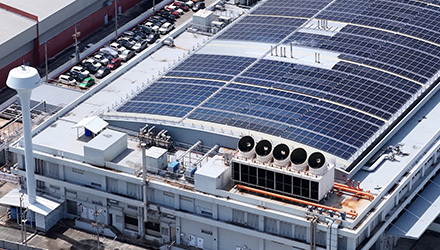
Data center developers eyeing Pennsylvania should be paying close attention to House Bill 2151. The bill, which cleared the state House in April 2026, would direct the Local Government Commission to create a model zoning ordinance for data centers—one that municipalities could adopt in whole, in part, or not at all. While voluntary on its face, the ordinance has the potential to significantly alter the regulatory environment for siting and permitting these facilities across the Commonwealth.
Sponsored by Rep. Kyle Donahue with 27 co-sponsors, HB 2151 covers a wide range of development considerations: dimensional and placement standards, setback distances from residential districts, noise and vibration limits, landscape buffers, mechanical screening, water feasibility studies, documentation of electrical capacity, and emergency response planning. Notably, a late amendment added a provision requiring community benefits agreements that promote local workforce participation, including registered apprenticeship programs and skilled construction labor.
The practical implications for developers are worth examining carefully. Although municipalities would not be required to adopt the model ordinance, opponents of the bill have already flagged that it could be cited in zoning disputes as evidence of what constitutes "reasonable" regulation—effectively creating a de facto standard even where a municipality has not formally adopted it. That dynamic could complicate approvals and introduce new grounds for challenge in land use proceedings.
The bill passed the House 124–77 and was referred to the Senate Local Government Committee on April 23, 2026. Its trajectory in the Senate remains uncertain. Environmental groups including the Natural Resources Defense Council, PennFuture, and the Sierra Club of Pennsylvania back the legislation. Food & Water Watch and allied organizations have pushed back from the opposite direction, calling the bill insufficient and advocating instead for a statewide moratorium on data center development. At least one state senator has floated a competing three-year moratorium proposal.
For operators and developers already navigating local permitting, the bill's stakeholder-input and annual-update mechanisms also deserve attention. The Local Government Commission would be required to solicit feedback from environmental groups, municipal organizations, and state agencies—and to update the model ordinance annually. That means the regulatory baseline could shift on a recurring basis, creating an evolving compliance landscape that project timelines will need to account for.
Key context: The bill is part of a broader legislative package on data centers (alongside HB 2150 on energy/water reporting and HB 1834 on PUC oversight). Environmental groups like PennFuture are actively urging constituents to contact their state senators in support. Meanwhile, at least one state senator has floated a competing proposal for a three-year moratorium on data center development. No scheduled Senate hearing or vote date was identified in publicly available sources as of today.