

Athlete Harassment in Sports Betting: How State Regulators and Industry Stakeholders are Fighting Back
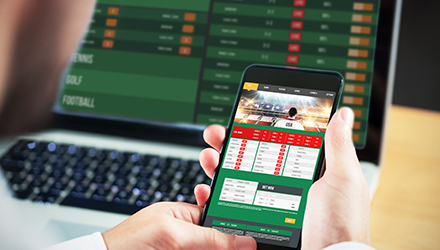
Since the repeal of PASPA in 2018, legalized sports betting has become a major U.S. industry. With its popularity, however, an unintended consequence has emerged with reports of harassment of athletes and other sporting event participants by disgruntled bettors, through threatening messages, online abuse and in-person confrontations. To combat this troubling pattern in the industry, regulators, lawmakers, operators and professional leagues are responding with a series of regulatory, legislative and technological tools to protect athletes and other sports participants vulnerable to betting-related harassment.
The Scale of the Problem: Surveys from Major League Baseball and College Sports
A recent survey of 100 MLB players conducted this past spring found that 81% had been confronted or contacted by a disgruntled bettor over the outcome of a game or individual performance. Incidents ranged from angry messages about unsuccessful bets, to more serious threats involving players and their families. On some occasions, players even received Venmo requests demanding remuneration for poor performance. Players reported limiting or completely avoiding social media and other online platforms due to the volume of abuse.
Other studies show that this issue is not limited to professional sports. A separate 2025 survey of NCAA athletes found that 51% of Division I men’s basketball student-athletes faced online abuse related to their athletic performance, with 46% reporting the abuse was tied to gambling. Earlier this year, NCAA President Charlie Baker urged state regulators to eliminate individual prop bets on college players to curb this harassment.
The Massachusetts “Bet on Respect” Initiative
On Aug. 31, 2026, the Massachusetts Gaming Commission (MGC) announced its new “Bet on Respect” initiative designed to protect athletes from betting-related harassment. The MGC press release cited support from multiple professional sports teams in Boston, as well as the NCAA and several leading sports betting operators licensed in Massachusetts.
The initiative leverages existing Massachusetts law under 205 Mass. Code Regs. 152.00 (2025) to place offending bettors on the state’s involuntary exclusion list, barring them from all sports wagering platforms and casino properties in Massachusetts. Key features of the initiative include:
- A dedicated reporting portal for leagues, players’ associations, college athletics programs, sports venues, and everyday citizens to submit complaints of harassment, whether online or in person.
- A general reporting email address (ReportAthleteHarassment@massgaming.gov).
- Investigation by the MGC’s Sports Wagering Division and Investigations and Enforcement Bureau (IEB), with subpoena power to gather evidence and identify perpetrators. The IEB may conduct further investigation, determine whether exclusion criteria are met, and can ultimately initiate exclusion under 205 Mass. Code Regs. 152.03.
Other State Legislative and Regulatory Action Targeting Athlete Harassment
In addition to Massachusetts, several other states have taken measures to curb sports betting-related harassment. As detailed below, legislative and regulatory action may differ in scope and enforcement across these jurisdictions, with some expanding excluded-person lists and others imposing criminal penalties.
Ohio – House Bill 33 (amending R.C. Section 3772.031) & Louisiana - Senate Bill 325 (amending La. R.S. 27:27.2)
Ohio enacted House Bill 33 in July 2023, which amended R.C. Section 3772.031(B) to exclude patrons “who, before, during, or after a sporting event, threatens violence or harm against any person who is involved in the sporting event, where the threat is related to sports gaming, or whose presence in a sports gaming facility or whose participation in the play or operation of sports gaming in this state is determined by the commission to pose a threat to the interests of the state.”
Louisiana Senate Bill 325 (Act No. 491, 2026 Regular Session), which went into effect Aug. 1, 2026, amended La. R.S. 27:27.2 to expand the Louisiana Gaming Control Board’s excluded persons list using the same language seen in Ohio.
West Virginia – House Bill 4700 (amending W. Va. Code Sections 29-22D-4)
West Virginia enacted House Bill 4700 in March 2024, which amended the West Virginia Lottery Sports Wagering Act to add Section 29-22D-4(d)(3) to ban sports betting patrons if “the commission determines that the person poses a threat to the safety of patrons or participants in a sporting event or determines that the person has engaged in a pattern of conduct of harassing a sports official, coach, or any participants.”
Wyoming – Amended WY Rules and Regulations 038.0002.8 Section 3
In November 2024, the Wyoming Gaming Commission unanimously voted to amend WY Rules and Regulations 038.0002.8 Section 3 to add to the Commission’s involuntary exclusion list “Any person who harasses any athlete”. The law went into effect on July 16, 2025.
Washington – Senate Bill 6137 (amending RCW 9.46.037)
Washington Senate Bill 6137, enacted June 11, 2026, amended RCW 9.46.037(2)(a) to prohibit patrons from threatening “a sports official, coach, or participant involved in a sporting event, athletic event, or competition upon which a wager may be made where the threat is related to a wager on an act or occurrence in that sporting event, athletic event, or competition.” This section also carries criminal penalties in addition to the sports betting exclusion.
New Jersey – Senate Bill 3200 (pending)
New Jersey Senate Bill 3200, introduced on Jan. 28, 2026, would require the New Jersey Division of Gaming Enforcement (NJDGE) to “establish a telephone hotline and other intake methods which allow individuals to report instances of harassment, coercive behavior, or any activities which may be detrimental to the integrity of athletes or competitors, sporting or athletic competitions, or sports wagering operations.” Further, this law would expressly authorize the NJDGE to “exclude individuals who have credibly been found to have engaged in harassment or coercive behavior related to sports wagering from engaging in sports wagering activities in this state.”
The New Jersey proposal would effectively expand the NJDGE’s authority to exclude bettors who have exhibited harassing or coercive behavior towards athletes, while adding dedicated intake methods to investigate and enforce the proposed law.
Compared to existing frameworks in other jurisdictions, New Jersey’s Senate Bill 3200 more closely resembles Massachusetts’ “Bet on Respect” initiative. While the other states have relied on legal provisions that prohibit athlete harassment outright, New Jersey and Massachusetts have elected a more proactive path to addressing the issue, by creating legal prohibitions and establishing intake and reporting infrastructure necessary to ensure optimal accessibility and enforceability. This proactive approach serves to deter offending bettors with lifetime bans or even criminal penalties.
Initiatives of Other Stakeholders and the Private Sector
Sports betting operators have also joined this effort, signaling a broader trend in the private sector to complement state action and fill gaps where specific legislation may be absent. Fanatics Sportsbook recently partnered with Integrity Compliance 360 (IC360) and Signify Group to launch its “Bad Actor Program” and plans to use Signify’s AI-driven Threat Matrix to monitor for abusive and threatening content targeting individual athletes and coaches across X, Instagram, Facebook, TikTok, and YouTube.
Separately, BetMGM updated its terms of service to explicitly prohibit athlete harassment, providing that: “Any player using the services who engages in abusive, threatening, defamatory, or harassing conduct of any kind toward sports officials, coaches, athletes, or any other individuals connected to sporting events may have their account suspended or permanently terminated, at BetMGM’s sole discretion.”
Professional sports leagues have also taken action to promote athlete safety in sports betting. On Sept. 15, 2026, the NFL, MLB, MLS, NBA and NHL sent a joint letter to state gaming regulators asking for regulatory action to address athlete harassment. Specifically, the letter called on all state gaming commissions and policymakers to adopt “uniform rules and legislative guardrails to help address this behavior.”
Takeaways
As more data on athlete harassment emerges across professional and college sports, it will be interesting to see how state regulators, policymakers, professional leagues and private companies continue to respond. Most state gaming commissions already have involuntary exclusion standards for sports betting patrons, but only a handful have specific language prohibiting those who harass, intimidate or threaten athletes or other participants in sporting events. The new Massachusetts model, bolstered by strong support from sports betting operators and professional sports leagues, could encourage other states to adopt similar proactive measures, as seen in New Jersey Senate Bill 3200.
Reprinted with permission from October 12, 2026 issue of the New Jersey Law Journal © 2026 ALM Media Properties, LLC. Further duplication without permission is prohibited. All rights reserved.