

When Your Client Insists on Testifying in a Criminal Case
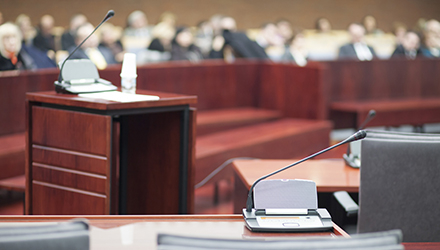
Attorneys sometimes struggle with the question of whether to allow a client to take the witness stand, particularly in a criminal case.
While it is true that letting a client testify on their own behalf carries certain risks, so does preventing them from telling their side of the story. Sometimes, clients will insist upon testifying in their own defense, in both civil and criminal cases.
In late January, former President Trump chose to testify in writer E. Jean Carroll's defamation damages trial against him in the U.S. District Court for the Southern District of New York. In that case, U.S. District Judge Lewis A. Kaplan placed strict boundaries on Trump's testimony, ruling that Trump could only answer three previously disclosed questions.
Judge Kaplan noted that "there [was] cause for concern as to whether Mr. Trump's examination and testimony [would] contain or suggest inadmissible evidence to the jury."
Trump likewise said in an interview last fall that he would take the stand in the criminal trials he faces, though he didn't specify which. When asked by radio host Hugh Hewitt about his willingness to testify, Trump said, "Oh yes, absolutely. ... That, I would do. … That, I look forward to."[1]
It remains to be seen whether he will, or won't, testify in any of the four criminal trials. But in any event, one hopes his attorneys are thoroughly discussing the pros and cons with Trump — and considering the potential risks that they may face, too, if the former president insists on taking the stand.
While defendants in criminal cases have a constitutional right to testify, there are many precautions an attorney should take before calling a client to the stand. The risk of a client lying on the stand can further complicate the issue. A lawyer is ethically obligated to take certain first steps before allowing their client to testify.
So what exactly should an attorney do if a client wants to testify? What if the attorney knows the client is going to testify falsely? This article will outline key points a lawyer should consider if their client wants to testify.
A Criminal Defendant's Right to Testify
The U.S. Supreme Court has explicitly recognized a criminal defendant's constitutional right to testify.[2] The right to testify on one's own behalf in a criminal trial is found in several provisions of the U.S. Constitution and is essential to the due process of law.[3]
The 14th Amendment's guarantee that no one shall be deprived of liberty without due process of law includes a right to testify on one's own behalf.[4] The right to testify is also secured by the Sixth Amendment and the Fifth Amendment.[5]
And testifying is ultimately the client's decision, not the attorney's decision.[6]
Attorney's Role
While a defendant's constitutional right to testify cannot be waived by counsel,[7] counsel should fully advise a client of the risks of testifying. Further, if an attorney believes their client will testify falsely, they should not simply allow their client to perjure themself or refuse to call the client to the stand — they must take preventive steps to intervene.[8]
Importance of Explaining the Right to Testify
Because the right to testify on one's own behalf is a critically important right, it is the counsel's duty to fully brief the client on that right so that they can make an informed decision on whether to testify.
A defendant can only waive the right to testify if the waiver is knowing, voluntary and intelligent.[9] Attorneys have a responsibility to protect their client's right to testify, including any waiver thereof.[10]
The courts give serious weight to the attorney's obligation to fully inform a client of their right to testify on their own behalf after thoroughly discussing this right with their client.
For example, in 2016, the U.S. Court of Appeals for the First Circuit reversed a narcotics conviction in Casiano-Jimenez v. U.S., in part because counsel did not thoroughly explain to their client that they had a right to testify on their own behalf. The attorney telling the client "that it would not be advisable ... to take the stand" was not sufficient.[11]
The First Circuit held that there must be a "focused discussion between lawyer and client, and that discussion must — at a bare minimum — enable the defendant to make an informed decision about whether to take the stand."[12]
For this reason, it is best to confirm with the client in writing that the right has been explained, that they understand the right and that they are voluntarily waiving the right to testify.
Potential Perjury
That said, the defendant's right to testify does not include making false statements.[13] Further, lawyers have an ethical duty of candor to the court — they cannot knowingly assist a client in presenting false testimony to the court.[14]
The American Bar Association's Model Rules of Professional Conduct prohibit attorneys from permitting a client to present false testimony only if counsel actually knows the evidence will be false.[15]
While the rules state that the falsehood must be obvious and the lawyer must "resolve doubts about the veracity of testimony" in the client's favor,[16] many courts have developed their own tests for determining when a lawyer "knows" testimony will be false.[17]
First and foremost, if an attorney becomes aware that their client intends to give false testimony, it is their obligation to advise the client not to give false testimony because such testimony can lead to a criminal charge for perjury.[18]
If, after explaining to the client that they are not permitted to perjure themself on the stand, the client continues to insist on taking the stand and testifying falsely, the attorney could make an application with the court to withdraw as counsel. The attorney should attempt to make generalized statements in their application to the court and preserve the attorney-client privilege.
If withdrawal is not granted or counsel is unable to make the application for other reasons, the lawyer should limit their questions to subjects about which they believe the client will only testify truthfully.
If limiting the questioning does not work, and the lawyer becomes aware that the client testified falsely on the stand, they are faced with a very difficult decision — whether to notify the court that their client perjured themself.
A lawyer has a duty of loyalty to the client and a duty to maintain the attorney-client privilege.[19] A lawyer also has an ethical duty of candor to the court. The ABA Model Rules hold that candor trumps loyalty to the client.[20]
If an attorney knows that their client committed perjury, they should thoroughly review their local rules of professional conduct and case law before taking remedial measures, such as informing the court of their client's untrue statements.
Civil vs. Criminal Case
In a criminal case, a client's decision not to testify cannot be used against them.[21] In a civil case, though, if the client invokes their right to remain silent, the other party may be entitled to an adverse inference.[22]
An adverse inference in a civil case, however, could ultimately mean that the client loses the lawsuit. Thus, such a decision should be fully discussed with the client.
Conclusion
In both criminal and civil cases, it is vital for an attorney to thoroughly discuss the benefits and risks of a client testifying in their own defense, and make sure that the client is making the decision knowingly and voluntarily.
Even if the client plans or is directed to testify for mere minutes, as Trump recently did, once the client is on the stand, it can be extremely difficult to control the narrative.
[1] https://www.nbcnews.com/politics/donald-trump/trump-says-absolutely-testify-criminal-trial-rcna103705.
[2] Rock v. Arkansas , 483 U.S. 44, 49 (1987) ("it cannot be doubted that a defendant in a criminal case has the right to take the witness stand and testify in his or her own defense"); see also U.S. v. Dunnigan , 507 U.S. 87, 96 (1993) (defendant's right to testify implicit in Constitution).
[3] Rock v. Arkansas, 483 U.S. 44, 51 (1987).
[4] See e.g., Ferguson v. Georgia , 365 U.S. 570, 602 (1961) (Clark, J., concurring) ("as secured by the Fourteenth Amendment, the right of a criminal defendant to choose between silence and testifying in his own behalf.").
[5] Rock v. Arkansas, 483 U.S. 44, 44 (1987).
[6] Kellogg-Roe v. Gerry , 19 F.4th 21, 27 (1st Cir. 2021) (the right to "testify on one's own behalf" is one of the "fundamental decisions that the Supreme Court has reasoned are reserved to the defendant"); Brown v. Artuz , 124 F.3d 73 (2d Cir. 1997) ("decision whether defendant should testify at trial is for defendant to make.").
[7] DeLuca v. Lord , 858 F. Supp. 1330 (S.D. N.Y. 1994), order aff'd, 77 F.3d 578 (2d Cir. 1996) (right to testify is fundamental and cannot be waived by counsel, regardless of strategic or tactical considerations).
[8] ABA Model Rules of Prof'l Conduct R. 3.3 cmt. 2 (2023) ("maintaining confidences of the client, however, is qualified by the advocate's duty of candor to the tribunal.").
[9] United States v. Leggett , 162 F.3d 237, 246 (3d Cir. 1998); Casiano-Jimenez v. United States , 817 F.3d 816, 818 (1st Cir. 2016) ("A criminal defendant's right to testify in his own behalf — or, conversely, not to testify — is a critically important right. Given the salience of the right, a defendant is entitled to be fully briefed so that he may make an informed choice.").
[10] United States v. Teague , 953 F.2d 1525, 1534 (11th Cir. 1992) ("professional responsibility of ensuring that the defendant's right to testify is protected and that any waiver of that right is knowing and voluntary.").
[11] Casiano-Jimenez v. United States, 817 F.3d 816, 820 (1st Cir. 2016).
[12] Casiano-Jimenez v. United States, 817 F.3d 816, 821 (1st Cir. 2016).
[13] U.S. v. Curtis , 742 F.2d 1070, 1076 (7th Cir. 1984) (defendant has constitutional right to testify which cannot be waived by counsel as matter of trial strategy, but defendant's constitutional rights were not violated when counsel refused to put him on stand because of intended perjury).
[14] Nix v. Whiteside , 475 U.S. 157, 158 (1986) ("accepted norms require that a lawyer disclose his client's perjury and frauds upon the court.").
[15] ABA Model Rules of Prof'l Conduct R. 3.3 (2023).
[16] ABA Model Rules of Prof'l Conduct R. 3.3 cmt. 8 (2023) ("although a lawyer should resolve doubts about the veracity of testimony or other evidence in favor of the client, the lawyer cannot ignore an obvious falsehood.").
[17] United States v. Long , 857 F.2d 436, 445 (8th Cir. 1988) ("a clear expression of intent to commit perjury is required before an attorney can reveal client confidences."); United States ex rel. Wilcox v. Johnson , 555 F.2d 115, 122 (3d Cir. 1977) (requiring "a firm factual basis for that belief").
[18] A person is guilty of perjury if, after taking an oath to testify truthfully, willfully and contrary to such oath, states or writes down any material matter the person does not believe to be true.[18] The penalties can include up to five years in prison. 18 U.S.C. § 1621.
[19] Upjohn Co. v. United States , 449 U.S. 383, 389 (1981) ("The attorney-client privilege is the oldest of the privileges for confidential communications known to the common law. … Its purpose is to encourage full and frank communication between attorneys and their clients and thereby promote broader public interests in the observance of law and administration of justice. The privilege recognizes that sound legal advice or advocacy serves public ends and that such advice or advocacy depends upon the lawyer's being fully informed by the client.").
[20] ABA Model Rules of Prof'l Conduct R. 3.3 cmt. 2 (2023) ("A lawyer acting as an advocate in an adjudicative proceeding has an obligation to present the client's case with persuasive force. Performance of that duty while maintaining confidences of the client, however, is qualified by the advocate's duty of candor to the tribunal. Consequently, although a lawyer in an adversary proceeding is not required to present an impartial exposition of the law or to vouch for the evidence submitted in a cause, the lawyer must not allow the tribunal to be misled by false statements of law or fact or evidence that the lawyer knows to be false."); ABA Model Rules of Prof'l Conduct R. 3.3 cmt. 10 (2023) "If withdrawal from the representation is not permitted or will not undo the effect of the false evidence, the advocate must make such disclosure to the tribunal as is reasonably necessary to remedy the situation, even if doing so requires the lawyer to reveal information that otherwise would be protected by Rule 1.6").
[21] Patrick v. City of Chicago , 314 F. Supp. 3d 970, 974 (N.D. Ill. 2017) ("when a defendant exercises his right not to testify absolutely, the government cannot comment upon his silence").
[22] Mirlis v. Greer , 952 F.3d 36, 45 (2d Cir. 2020) ("We have held that factfinders may draw adverse inferences against parties to civil actions when they refuse to testify in response to probative evidence offered against them."); Planned Parenthood Fed'n of Am. Inc. v. Newman , No. 20-16068, 2022 WL 13613963, at *3 (9th Cir. Oct. 21, 2022), cert. denied sub nom. Ctr. for Med. Progress v. Planned Parenthood Fed'n of Am. , 144 S. Ct. 263 (2023) ("Courts may draw adverse inferences in civil cases from a party's invocation of the Fifth Amendment right not to testify.").
Reprinted with permission from Law360(c) 2024 Portfolio Media. Further duplication without permission is prohibited. All rights reserved.