
The Supercharged ESOP: How to Beat Private Equity at Its Own Game

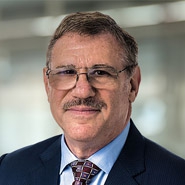
When business owners start thinking about an exit, private equity often seems like the obvious choice that will deliver a premium price and a clean break. But Harvey Katz has spent 40 years making the case for a different path: the Employee Stock Ownership Plan, or ESOP, a tax-qualified structure that allows a company's employees to become its owners. The problem, historically, was that ESOPs couldn't match what private equity was willing to pay. Harvey has helped to develop an approach — what he calls the Supercharged ESOP — that changes that calculus entirely. We sat down with Harvey to find out how.
Let's start with the problem. A business owner is considering an exit. Why does a traditional ESOP lose to private equity?
Because the math has always appeared to favor private equity — and appearances are hard to argue with.
A traditional ESOP trustee has a statutory duty to pay no more than fair market value. That process is rigorous and legitimate, but it produces a number that reflects what the business is actually worth as a going concern — not what a motivated buyer armed with financial engineering tricks might pay. There is no doubt that private equity will offer a premium. They assume they can cut 25% of your workforce, push harder on billing, and flip the business in five to seven years at a profit. The headline number looks better — sometimes 20% to 25% better — and that's a hard gap to ignore.
For years, I'd pitch ESOPs to business owners and convert fewer than one in five. The other four would say, "I love the idea. I want to take care of my people. But private equity is offering me more." And I understood it. When you're looking at your retirement, your estate, your legacy — a bigger number is a bigger number.
What changed is that we developed a structure that doesn't just close that gap. It leapfrogs it.
What's the core idea?
We call it the Supercharged ESOP. You'll also hear "enhanced ESOP" or "ESOP 2.0." The core insight is that private equity makes its money through leverage and financial engineering: they load debt onto your company, use pre-tax cash flows to service it, and walk away with the equity upside when the debt is gone. We do the same thing — except the owner and the employees keep the upside, while using the tax advantages that Congress granted ESOPs to dramatically improve the result.
When a company is 100% owned by an ESOP and elects Subchapter S status, it pays zero federal and state income tax. That's not a loophole — it's specifically authorized by statute. Combine that with a carefully engineered redemption strategy and a Roth conversion, and the selling owner can walk away with more after-tax value than any private equity deal could deliver. Much more, in many cases.
How do you accomplish this magic?
It’s really not magic. We just follow some of the private equity playbook by placing a lot of debt on the company before the ESOP sale. Doing so increases the transaction leverage and allows us the company to pay interest to the selling shareholder. This structure is very tax efficient because 100% ESOP owned company pays no income tax and repayment of the redemption debt is essentially tax free. The company typically is able to retire all of the debt within 5 to 10 years. The shares sold back to the company are retired and the remaining shares are sold to the ESOP.
We also follow IRS regulations strictly while finding ways to increase the share that the selling shareholder receives from within the ESOP. These rules are very complex and technical and not enough ESOP professionals understand them. As a consequence, they build in additional costs to provide extra incentives for key employees outside the ESOP. Our way is more efficient. All of the incentives for both key and rank and file employees are in the same place.
We also use a Roth conversion. This is where the structure becomes genuinely extraordinary. Immediately after the redemption — when the company's equity is at a low point— participants elect Roth status on their ESOP accounts. The tax due is calculated on the value of the shares, on a company with significant debt rather than its full enterprise value. A small tax bill today, paid on a significantly lower valuation. Then, as the company pays down its debt, everyone’s Roth account (including the former owner’s account) grows dramatically— entirely tax-free. At retirement, it rolls into a Roth IRA and continues to compound tax-free, passing to heirs without an income tax bill.
So, the total picture is: Sale of a $50 million company for $49.5 million in seller notes paid off over time, plus a $25 million tax-free Roth account?
Exactly. And both are on top of interest paid on the seller notes and whatever salary the owner continues to draw while remaining involved in the business.
Compare that to private equity. PE might offer $60 or $65 million — but 30% or more of that headline is typically a subordinated equity rollover you are likely to never fully realize, and every dollar of the sale is subject to capital gains tax. With the supercharged ESOP, the $50 million in principal is fully realized (plus interest) over five to ten years, and the $25 million Roth stake is entirely tax-free. When you run the after-tax comparison, the ESOP can deliver $24 million or more in the owner's favor.
Does the owner have to give up control of the business?
Not at all, and this is one of the most important distinctions. The ESOP trustee is a passive shareholder. Day-to-day operations continue under the selling owner's leadership — no mandatory staff cuts, no outside firm dictating your strategy. The trustee may ask that one or two independent directors of your choice join the board, which is honestly a healthy thing. But the owner is still running the company.
This is particularly meaningful for physicians. When a physician practice goes ESOP, clinicians retain full autonomy over patient care and staffing. No one is substituting nurse practitioners for doctors or pressuring staff to see more patients to hit a PE firm's revenue targets. The practice operates the way its founders built it.
What do employees get out of this?
Everything that private equity takes from them. In a PE sale, employees are costs to be managed — headcount gets cut, compensation stalls, and the culture of an entrepreneurial business gets replaced by the culture of a portfolio company.
In an ESOP owned company, every full-time employee is an owner. As the company pays down debt and grows, share values grow with it. Employees can also elect Roth status on their allocations, making their share of the company's appreciation entirely tax-free. A manager with 1% of the company could accumulate millions of dollars in a tax-free account over a career — genuine, lasting wealth built through the work they were already doing.
I sometimes say I'm doing God's work — and I mean it. When you structure one of these transactions well, you're not just executing the owner’s tax strategy. You're building real financial security for people who spent their careers building that company. And there's a practical business benefit too: when employees are genuine owners, they show up differently. Their engagement, their productivity, their commitment to the company's success — all of it increases in ways that no bonus plan can fully replicate. That growth feeds back into the value of everyone's stake. That's a legacy worth a great deal more than a PE multiple.
What kind of business is a good candidate, and why haven't more people heard about this?
The fundamentals are consistent profitability, strong cash flow, a solid management team, and sufficient scale — at least 15 employees and $2 to $3 million in EBITDA. Below that, transaction costs don't justify it. The structure works across a wide range of industries: construction, manufacturing, engineering, healthcare, professional services, retail. Really any profitable business with an owner who cares about more than just the last dollar.
The sweet spot is typically a business owner in their 50s or 60s who has built something real, has a loyal workforce, and is starting to think seriously about exit options — but isn't sure any of the conventional alternatives actually serve them well. That uncertainty is entirely justified. These transactions are no more expensive than hiring an investment banker for a traditional sale, and the outcome, for the right business, is simply in a different league.
As for why it isn't better known: two reasons. First, complexity — this strategy doesn't win on a napkin. It requires a real conversation and advisors who understand all the pieces. Second, institutional resistance. An established segment of the ESOP community profits from a different structure — the traditional Section 1042 rollover — and has been slow to promote a competing approach. But that's changing. Over the past decade, more traditional providers have been reaching out to understand how this works. And owners who sit down and run the numbers find it so compelling that the question stops being "why would I choose this?" and becomes "why would I choose anything else?"
Harvey M. Katz is a Partner and Co-Chair of the Employee Benefits & Compensation Department at Fox Rothschild LLP. He can be reached at 212.878.7976 or hkatz@foxrothschild.com.